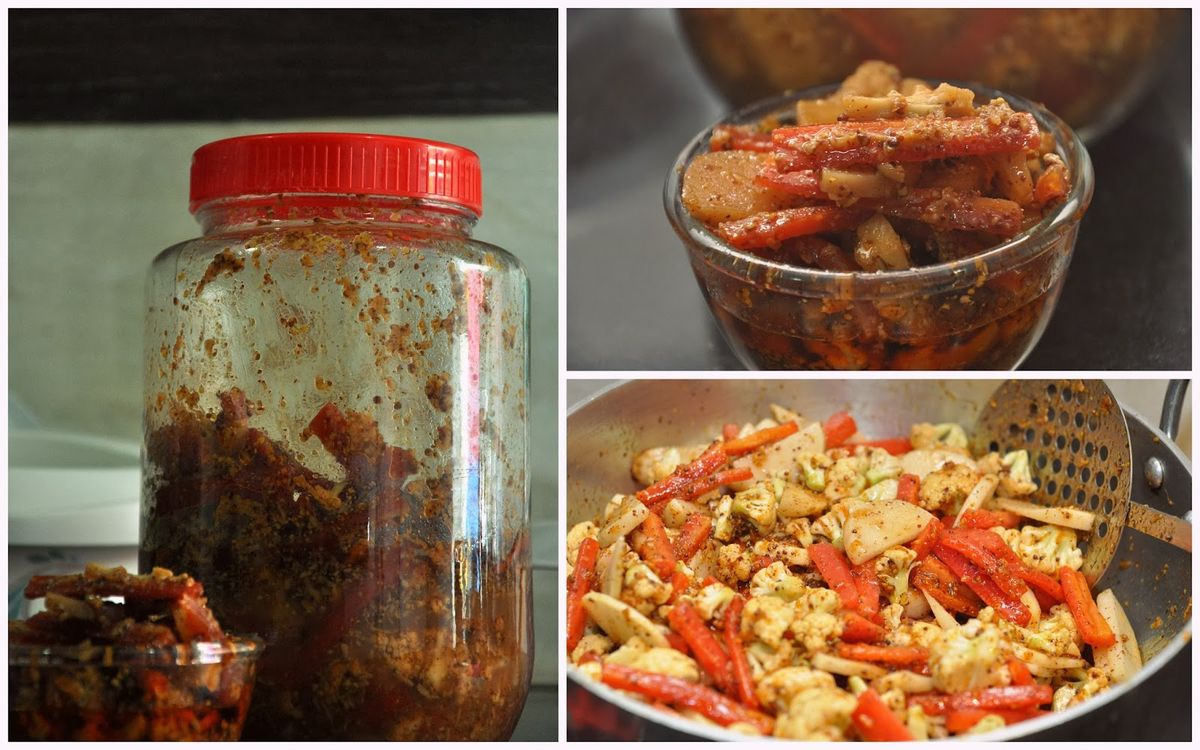
Quintessentially Punjabi ..... Gajar Gobi Shalgam ka Achaar (Carrots Cauliflower & Turnips Pickle)
Sign in to save recipes, rate them, and track what you've cooked.
In India we take the term spice up your life and your food a bit too seriously. Food is always flavourful and spicy and just in case you don't agree with the level of spice, there is atleast one bottle of pickle in every kitchen that you can turn to and make your meal every bit like you imagined it to be. Pickles are an essential in Indian cuisine and every part of the country has its own pickles in every season. Pickles range from oily and heavy to mild and vinegary, sweet and tangy to super spicy. In fact its hard to imagine ingredients that we don't pickle in India. Nearly every vegetable and fruit can be pickled or preserved in one form or the other. In most cases the intent of pickling in addition to the awesome taste is to preserve seasonal produce for off season consumption. Pickles made in different parts of the country vary immensely and not just in the ingredients but also in methodology which is also determined by the weather in which pickling is being done.
Now I am not much of a pickle person. That said, I enjoy pickles immensely but I don't need them in every meal. I often feel that pickles mask the taste of food and I enjoy food at home just as it is. But often when the meal is not at home or its just too plain and boring I turn to pickles to bring it to life. And there are many foods that just go with pickles only - for instance, plain parathas and warm matthis. There are many pickles that I like but my favorites are homemade lemon and mango pickles which are a staple in every Indian household. But the one pickle that I look forward to as the winters of north India set in is a pickle made specifically in Punjab.
Fondly known as Gobi Shalgam Gajar ka Achaar, this pickle is an absolute treat. One can find this pickle in the supermarkets in north India made by a select few companies but the best place to relish this is in the kitchens of mothers and grandmothers who have been making these for ages. The family tastes and preferences are handed down from generation to generation. I remember my grandmother coming to our home once every winter to mix the pickle for us. My mother would prep all the ingredients and wait for her mother to just put them together. Making a pickle requires a lot more art and science than everyday cooking and the extra love that my granny used to put into making this would simply set it apart. The pickle used to get consumed within weeks and its warmth made the gruelling north winters a touch more bearable and almost welcome the next year as well.
This was the first time in 13 years that I was in India in autumn and even though Mumbai weather gets nowhere close to the winters in Punjab, the fresh carrots, cauliflowers and turnips at every vegetable stall were simply begging to be pickled and relished at mealtime. I don't know how to make this pickle but this was my turn to learn and so I turned to my mother in law for help. She is a very good cook and her pickle comes very close to the ones I enjoyed as a child. So this recipe comes to you from grandma's kitchen and I will try and simplify it as much as possible so that it does not matter what part of the world you are in, you can turn to this recipe to enjoy the taste of grandma's cooking in your kitchen.
There are some things to be kept in mind for this pickle. As much as possible allow the vegetables to dry and dehydrate in the hot sun but in case weather does not permit that, you can turn to the method of frying lightly that I have shared below which serves the same purpose. The vegetables need to be cut into big chunks and not very small ones so they don't release a lot of water upon pickling. Last and the most important will be to ensure that the ingredients are mixed together only after everything has cooled down to avoid a lot of water being released into the pickle which reduces the shelf life of the pickle immensely.
Ingredients
- 1/2 kg carrots (gajar)
- 1/2 kg turnips (shalgam)
- 1 kg cauliflower
- 1/3 cup fresh garlic peeled and grated
- 1/3 cup gresh ginger peeled and grated
- 1/4 cup tamarind(imli) pulp
- 1/3 cup distilled vinegar
- 1 1/4 cup jaggery
- 1 tablespoon red chilli powder
- 1/3 cup ground mustard seeds
- 225 ml mustard oil
- 1 tablespoon garam masala powder
- salt according to taste
Instructions
- 1
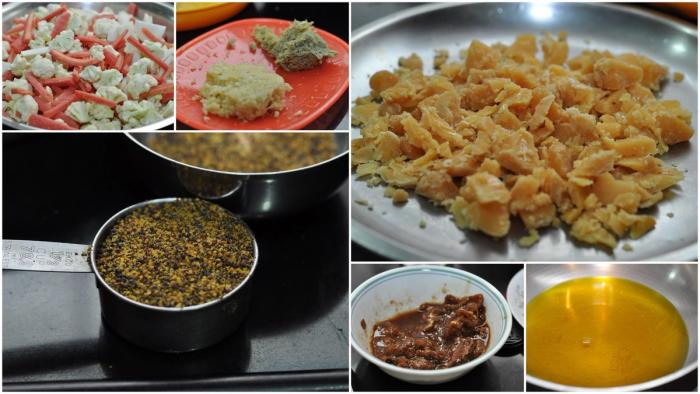
Cut the vegetables into big chunks, wash and dry them spread out on a big piece of cloth in an open airy space. Make sure the vegetables are dried nicely as we want to avoid moisture as much as is possible.
- 2
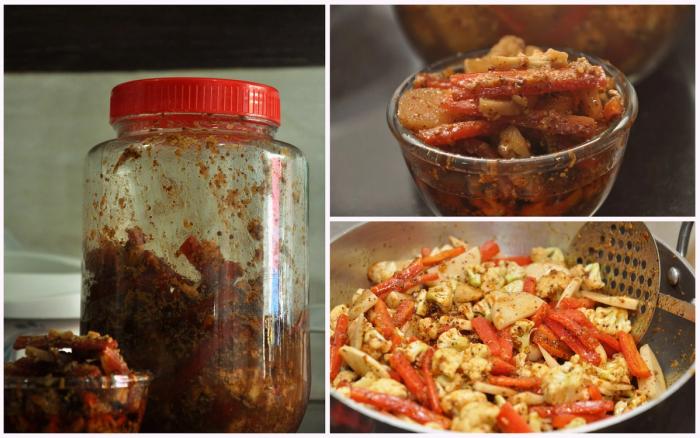
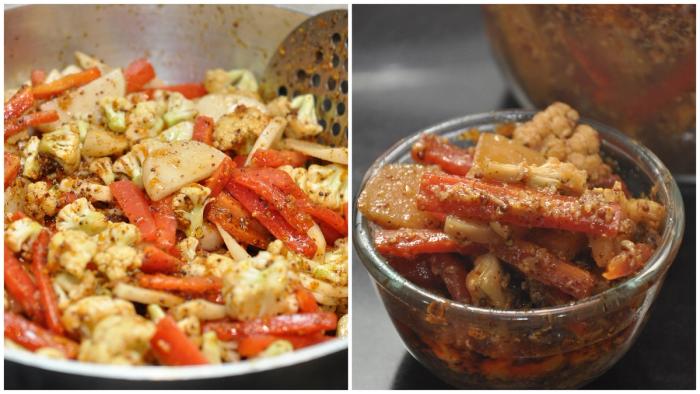
Heat mustard oil in a kadhai/pan till it starts to smoke and the bitterness from the oil is gone. Add the vegetables to this hot oil in small batches, not to cook the vegetables but merely to draw the moisture out of these. Take out the vegetables in a container and set aside.
- 3
In a small pan on the side, boil the jaggery and imli pulp together to dissolve the jaggery completely and cook it over medium heat for 2-3 minutes after it has dissolved to enhance the flavor further.
- 4
To the remaining oil in the pan, add the garlic and ginger to brown slightly and get cooked. The trick is to put the garlic first and then the ginger so it does not stick to the pan.
- 5
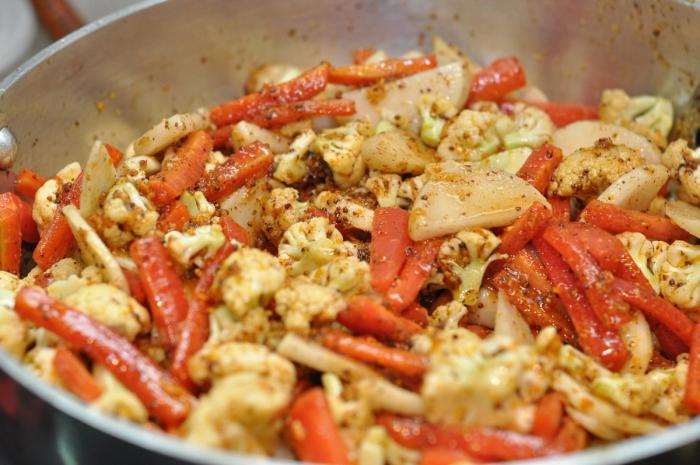
To the ginger garlic mixture, add the red chilli, salt, mustard, jaggery-tamarind & vinegar. Mix nicely to make a well incorporated base.
- 6
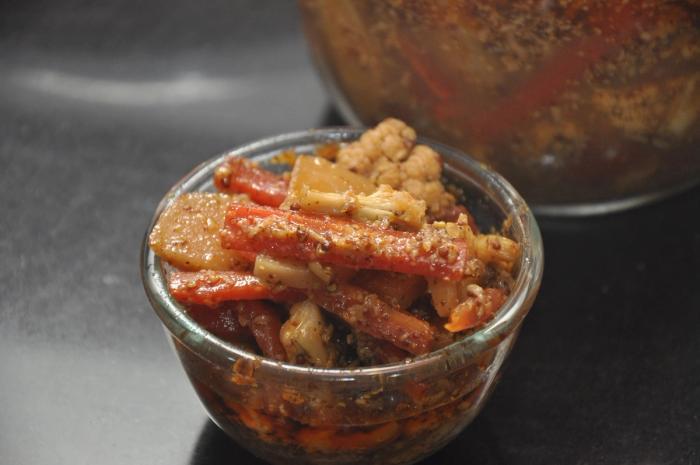
When the mixture above cools down completely, add the vegetables that had been set aside and mix nicely to incorporate the vegetables and spices very evenly. Transfer to a clean, dry glass jar and let it sit for 3-4 days preferably in the sun during the day so that the vegetables get a little soft and absorb the spices and flavors. Enjoy!
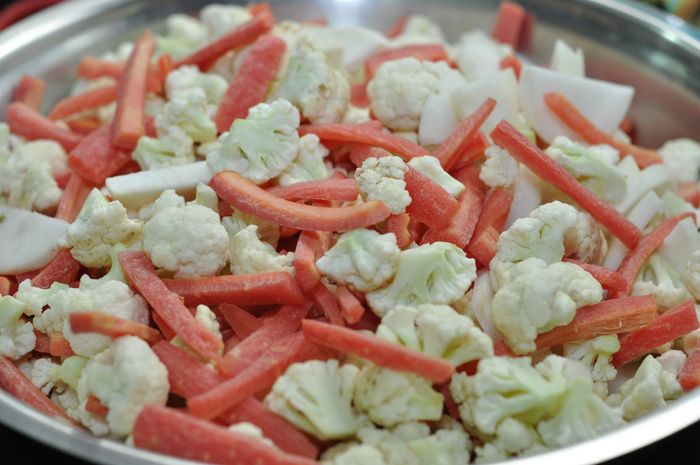
Photo Gallery
Reviews
Sign in to rate this recipe.
No reviews yet — be the first!