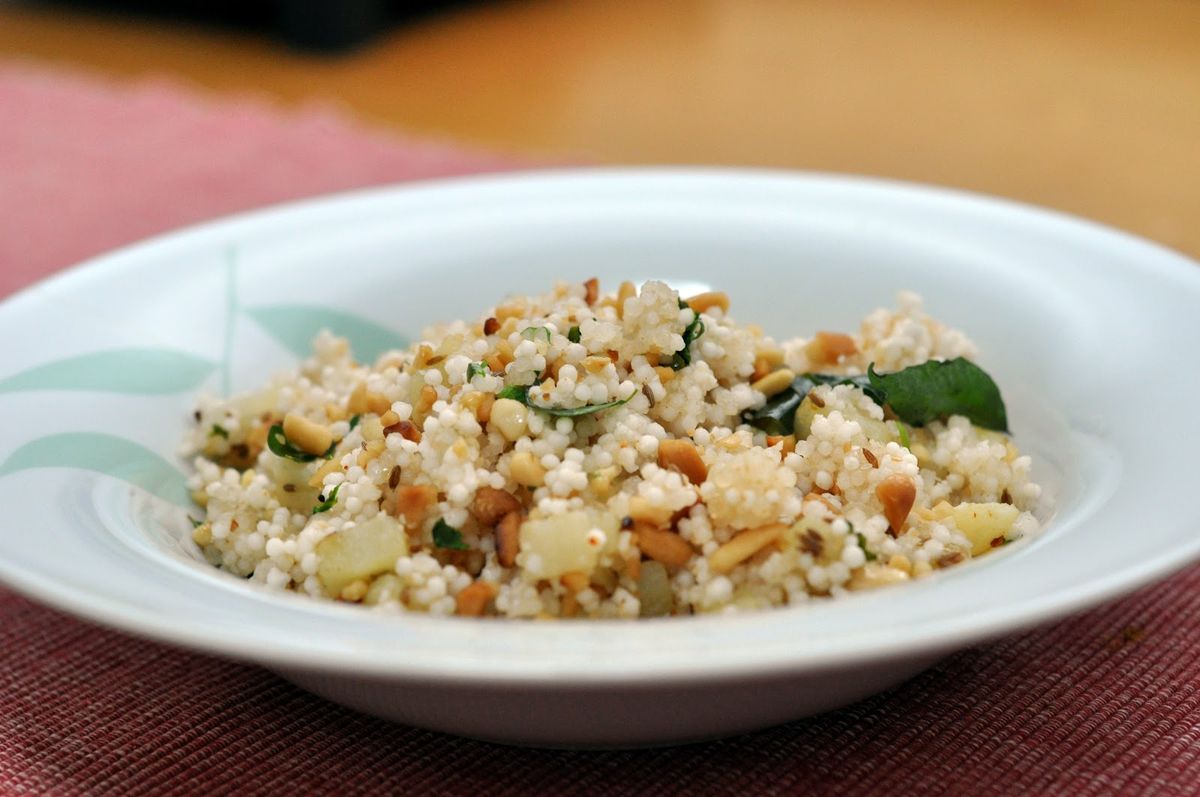
Navratri Fasting - Sabudana Khichdi
Sign in to save recipes, rate them, and track what you've cooked.
A few years ago, I used to fast all days of Navratri breaking them on ashtami day with the usual prasad of halwa, poori and chana. With work, kids and lots more on my plate, I no longer have the stamina to fast for all days so I do the bare minimum of two which is also sometimes split between hubby and me. Its Navratri time again and whether I'm fasting for one day or all, there is no reason to compromise on the taste and variety of foods I get to eat. Navratri fasts are fairly easy by comparison. Even though the restriction on all primary grains (rice, wheat, maize etc) seems like there are few options, on closer inspection the situation is not that bad. Since milk and several milk products are permitted, there is an entire range of foods that one can eat including paneer and yogurt. Most vegetables are a no-no but potatoes, tomatoes, chillies, coriander leaves, curry leaves are the exception.
One of the things which is s staple in Navrarti is Sabudana Khichdi and it is surprisingly also the toughest to make. Sabudana are pearls made of tapioca starch. They absorb a fair bit of moisture and are very easy to get tough during cooking. How do you stop the end result from being sticky and rubbery instead of being light and fluffy. I had been doing a lot of research on how to make good sabudana khichdi and there is a lot of wisdom out there on the internet. Several ladies have put videos out there also teaching us how to make the best sabudana khichdi and inspired by these videos and recipes on the internet, I made this a few times a couple of years ago and there has been no looking back.
The most important step to getting this right is the soaking of sabudana. The duration for soaking is determined by the size of the sabudana. For the small sized balls, you need to wash and soak them for approx 5 minutes in just enough water to cover them. After 10 minutes, you need to transfer the contents to a strainer where all the excess water will drain out and the balls will get a chance to soften further without being water logged. If you are using the big size sabudana, it needs to be soaked for about 30 minutes and left in the strainer for about 4-6 hours. To test if sabudana has been soaked well, press one ball in between the fingers. It should be soft all the way through. If it feels dry and hard, sprinkle with some water while on the strainer and leave it for another hour or so. The second thing which helps to keep the sabudana from being sticky is mixing the soaked/softened sabudana with crushed roasted peanuts before cooking it. This also helps to keep the sabudana dry and prevents it from sticking.
Ingredients
- 1 cup sabudana
- 1 large potato diced into medium dice
- 1/2 cup skinless peanuts
- 1 tsp cumin (zeera) seeds
- 2 tablespoons vegetable oil
- 10-12 curry leaves
- salt and red chilli powder to taste
- lemon juice to sprinkle on top
Instructions
- 1
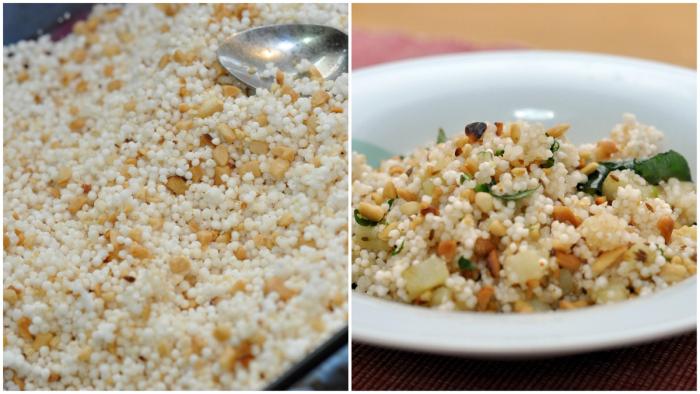
Soak the sabudana as per instructions above. Roast the peanuts over low flame in a dry pan. Crush the roasted peanuts with a mortar and pestle. Place the soaked sabudana in a bowl. Mix the roasted crushed peanuts in the sabudana and add salt and red chilli powder to it.
- 2
Put oil in a pan over medium heat, add the cumin seeds and curry leaves. Add the diced potatoes and sprinkle with a little bit of salt. Cover and cook over low heat till the potatoes get soft.
- 3
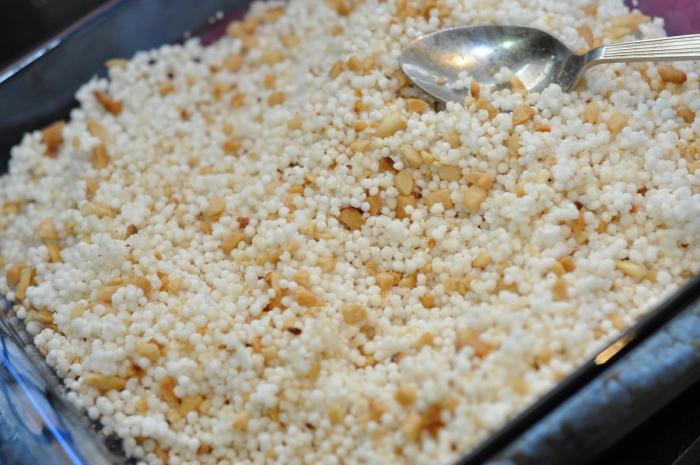
Add the sabudana mixed with peanuts to the potatoes in the pan and cook over low heat till the sabudana is cooked through. Keep stirring often to distribute the heat evenly. Serve hot sprinkled with fresh coriander leaves and a little lemon juice.
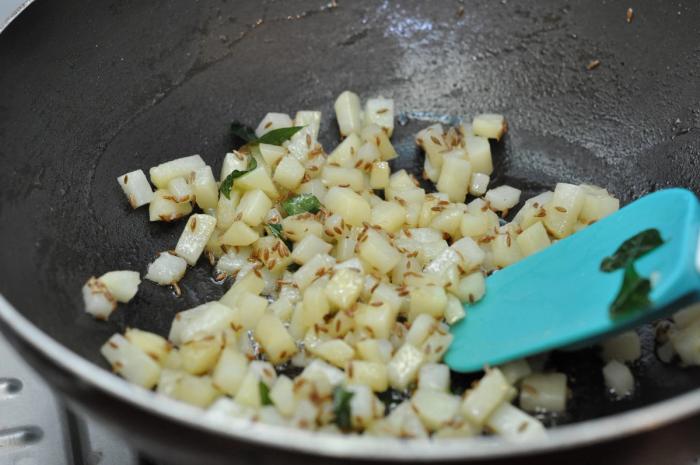
Photo Gallery
Reviews
Sign in to rate this recipe.
No reviews yet — be the first!