Navratri Ashtami Prasad
Sign in to save recipes, rate them, and track what you've cooked.
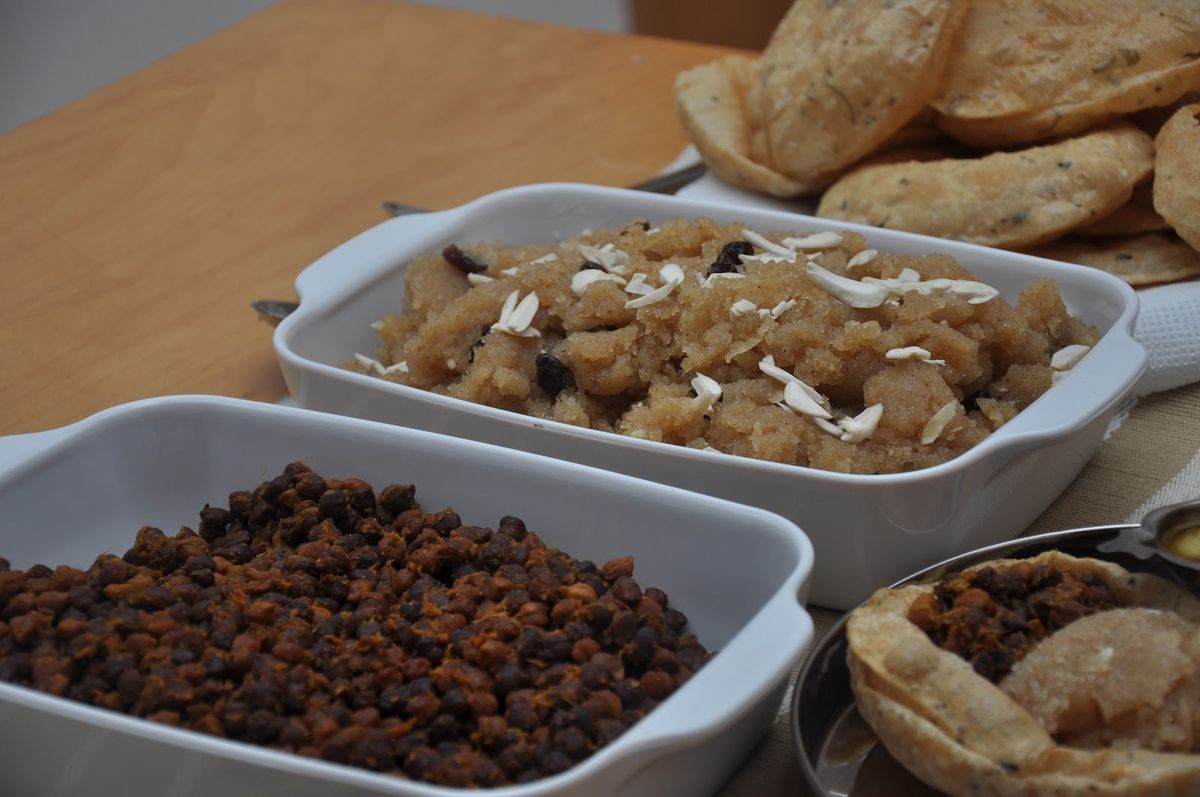
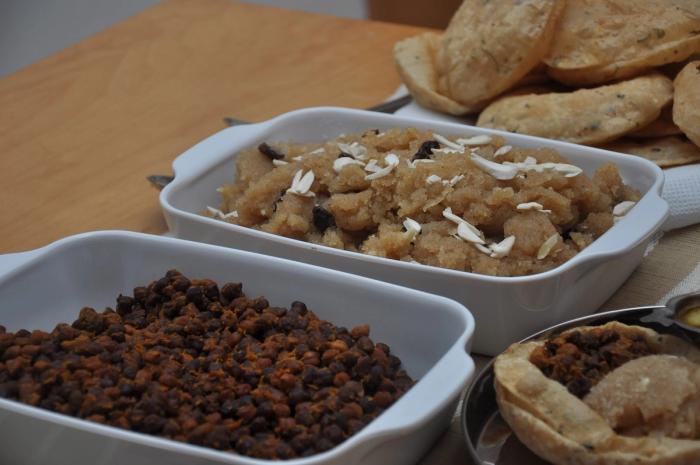
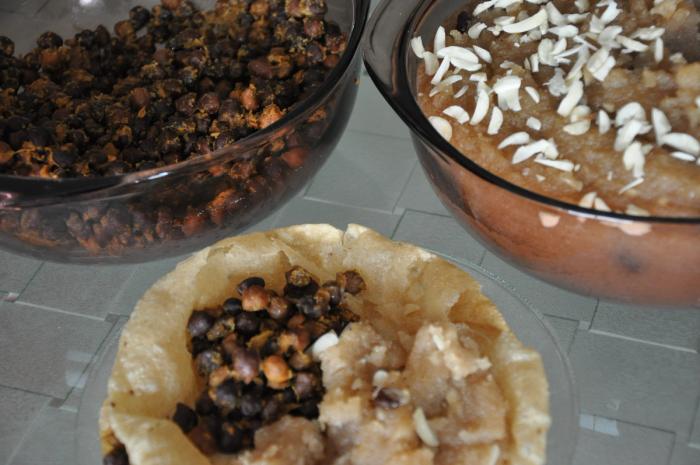
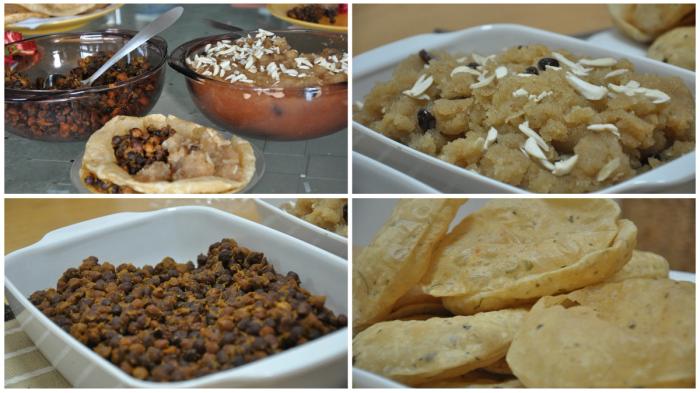
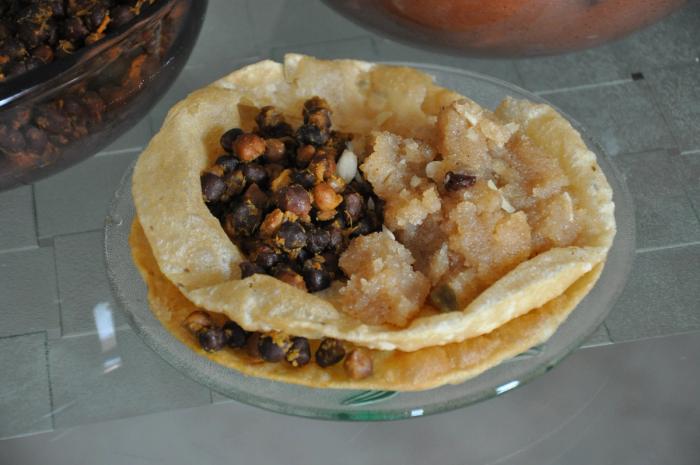
There is hardly a North Indian child who is not familiar with the tradition of Kanjak - the eighth day of Navratri when every home is filled with the aromas of halwa, poori and channa. It is especially memorable for little girls who get worshipped in every home in the family and neighborhood and get gifts or cash tokens.
The most surprising part of the entire festivity is that in every house nearly the same ingredients are used to make the same three dishes but each one of them tastes different. This where the personal touch and traditions and cooking techniques of each family make a difference. I learnt to make halwa from my Buaji (Father's sister) more than 19 years ago and I learnt to make channa from my Mamiji (Mother's brother's wife) at pretty much the same time and I have been cooking with these recipes ever since.
This blog entry is an attempt to share the traditions in my family and it is also a tribute to the wonderful women who have taught me a lot of cooking in the early years of my life. I make this twice every year. And my kids don't eat halwa or channa but I hope that when they grow up they will atleast remember the tradition with fondness even if they don't enjoy the food that I associate fondly with it as much as I do.
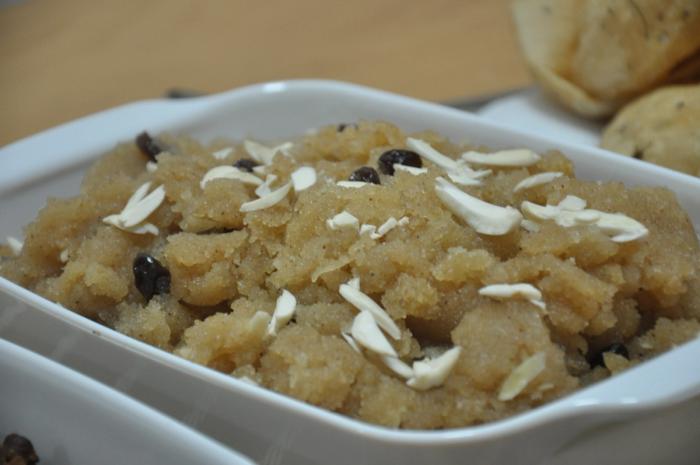
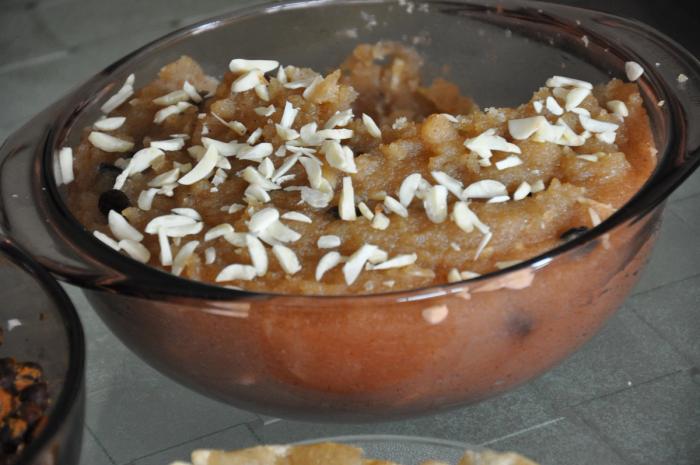
Sooji Halwa
Ingredients
- 1 cup sooji (semolina)
- 1/4 cup ghee (or enough to moisten the sooji)
- 1.5 cups fine grain sugar/1.25 cups coarse grain sugar
- 3 cups water
- 3 green cardamom pods
- 15 almonds (soaked in water overnight, peeled and sliced)
- 1/4 cup raisins
Instructions
- 1
Dry roast the sooji over very low heat till it turns a very pale brown color and you can smell the aroma of sooji being roasted. Make sure you keep stirring it all the time to distribute the heat evenly. Then add the ghee and roast over very low fire till all the sooji is evenly roasted to a light brown color. Stirring continuously is very important to ensure it gets roasted evenly.
- 2
While the sooji is roasting, make a syrup by boiling the sugar, water and cardamom for about 5 minutes over high heat in a covered pan till all the sugar is dissolved and the cardamom flavor seeps through the syrup.
- 3
When the sooji has roasted, add the sugar syrup and cook over medium heat uncovered till the mixture begins to thicken and starts to leave the sides of the pan. Add raisins at this stage. Keep stirring continuously to ensure even cooking.
- 4
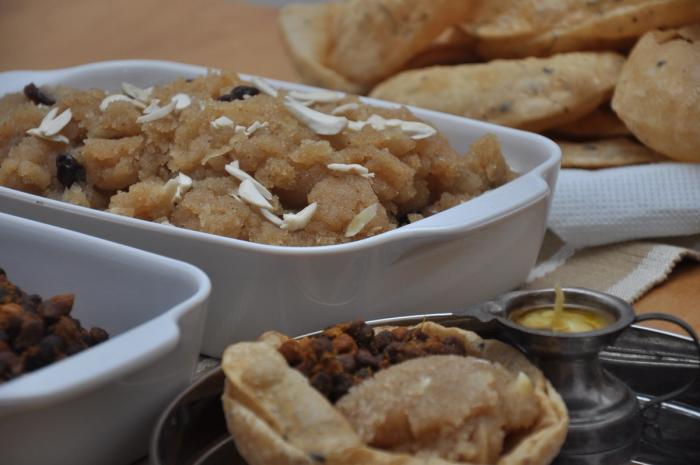
When the halwa is done, add 2/3 of the sliced almonds to the halwa and stir to combine throughout. Transfer to a serving dish and sprinkle the remaining almonds on top as a garnish.
Black Channa Masala
Ingredients
- 1 1/2 cups black channa (soaked overnight in water)
- 1 large tomato or 2 medium tomatoes (grated/ground in a food processor or blender)
- 1 inch ginger grated
- 1 tablespoon coriander powder
- 1/4 teaspoon turmeric powder (haldi)
- 1 teaspoon zeera seeds
- 1/4 teaspoon red chilli powder
- 2 teaspoons vegetable/canola oil/ghee
Instructions
- 1
Boil the channa in a pressure cooker with enough water and some salt till done.
- 2
While the channa is boiling, heat a pan over medium heat and add the oil. When the oil is heated, add the zeera seeds. When they begin to cook in the oil, add the grated ginger and cook for a couple of minutes.
- 3
Add the ground tomatoes to this and cook over medium heat till the tomatoes are cooked (5-8 minutes).
- 4
Then add the coriander powder, turmeric, red chilli powder and salt to taste and cook for a couple of minutes.
- 5
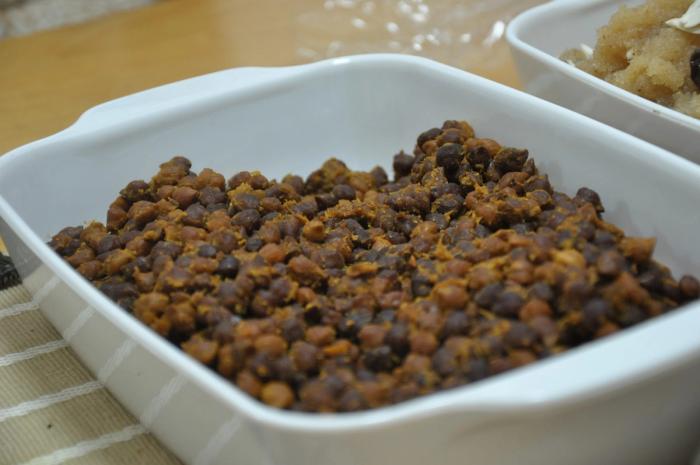
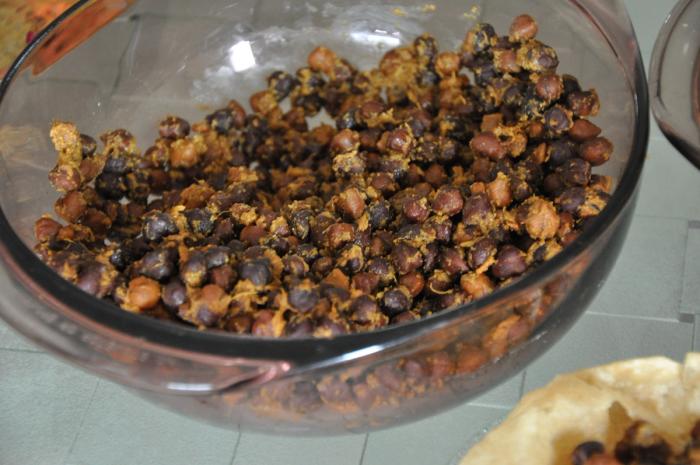
When the channa is boiled, drain from the water and add to the above masala and cook for 3-5 minutes stirring well throughout. Add 1/4 cup of the reserved water from the drained channa to ensure even mixing of the masala. When the channa is dried, check for seasoning and transfer to a serving dish.
- 6
Serve the halwa and channa along with fresh hot pooris. Happy Ashtami!
Photo Gallery
Reviews
Sign in to rate this recipe.
No reviews yet — be the first!