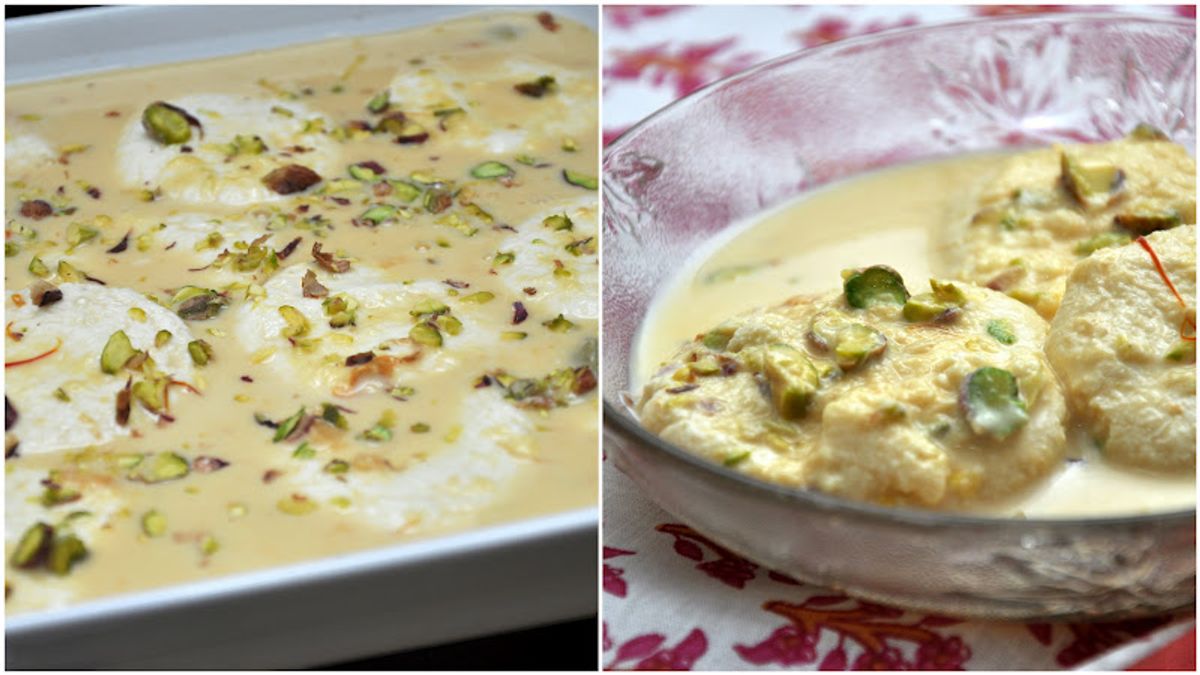
Kesar Rasmalai
Sign in to save recipes, rate them, and track what you've cooked.
Coming from Punjab, I have always been spoilt for choice when it comes to excellent quality milk and milk products like paneer and milk based sweets. Good Rasmalai is one sweet that is very hard to find outside Punjab where the quality of milk and paneer just don't hold up to the required standards. And everytime I go back home, I have to buy some of this soft, delicate, delicious dessert and treat myself to a few pieces.
The other day I was browsing on the internet, looking for some nice recipes to make coconut burfi. While I did not find the recipe for coconut burfi, I did stumble upon this video to make Rasmalai. This recipe has been shared by chef Sanjy Thumman and is available on his site VahrehVah.com and on Youtube. It is definitely a video worth watching as there are a lot of tips and tricks that he shares which are important to get the recipe right (there is a lot of narration of a certain incident - please don't lose patience while watching it :)). I will try and share as many tips as I can here.
The key to making good rasmalai lies in the chenna - the paneer. There are several tricks to getting it the right consistency. The first one being the way it is made. Milk is boiled and then a mixture of water and vinegar is added to it to curdle it and make chenna. Once the milk is curdled, it needs to be cooled immediately under running water. The chenna should be hung in a cloth for another hour to let all the water drain out. The chenna is very smooth and silky and very very soft unlike paneer which is usually shaped into a block. It needs to be rubbed in the cloth. This can also be done in a food processor. But this is a must-do. This will make sure the rasgullas are soft but at the same time they don't break or fall apart.
The other trick is to have a sugar syrup of the right consistency when making the rasgullas. 1 part sugar to 6 parts water is boiled. if during the cooking of rasgullas you feel that the sugar syrup is getting thicker, more water needs to be added. It will be good to have a marker or indication in the pot of how much the water level needs to be and keep replenishing after every batch. Some recipes call for cooking the rasgullas in a pressure cooker but I prefer this one. I dont think all cookers create the same amount of pressure and the release mechanism also varies from brand to brand and type of cooker used. So I would recommend using a pan of boiling water and covering it with a lid.
The rabri recipe that I saw in a few places called for cooking the milk over a low fire. I tried a shortcut by cooking some of the milk in an open pan and letting it thicken and adding a can of evaporated milk to it. I also added saffron and cardamom to the milk to get the color and flavor that I was looking for. If you like white rabri, omit the evaporated milk. Thickening the milk will not give the caramelized color that evaporated milk tends to have.
Ingredients
- 1.5 L Fresh Milk
- 1 tablespoon vinegar
- 1/4 cup water
- 1/8 cup fresh cream
- 1 cup sugar
- 6 cups water
- 4 pods green cardamom
- 1.5 L Fresh Milk
- 1 can evaporated milk
- 1/8 cup fresh cream
- 2 pods cardamom
- 1/2 cup sugar
- 1 teaspoon saffron strands
- Chopped/sliced pistachios for garnish
Instructions
- 1
To make the chenna, heat together the milk and 1/8 cup fresh cream in a large pan. When the milk comes to a boil, add the vinegar and water mixture and stir gently to curdle the milk leaving the whey behind. Immediately, transfer the chenna to a muslin/cheese cloth set over a strainer and drain the liquid. Rinse immediately with tap water to cool down the chenna and let it hang for an hour for all the liquid to drain out.
- 2
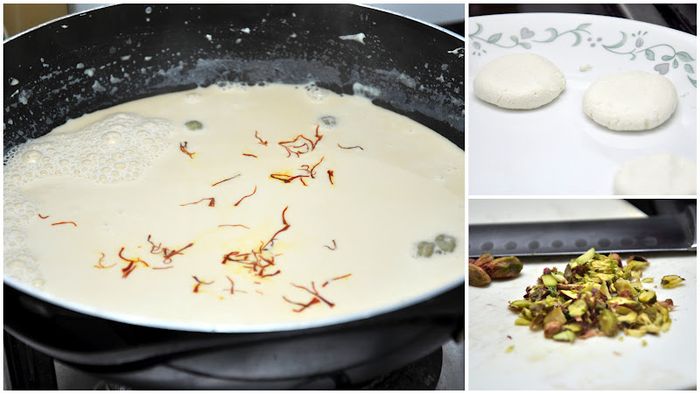
In the meantime, prepare the rabdi by boiling the fresh milk and cream in a shallow non-stick pan for a few minutes. Let it boil, keep stirring continuously for about 10-15 minutes till the mixture starts to thicken. At this stage, add the evaporated milk, cardamom pods, saffron and sugar and let it boil for another 10-15 minutes. Set aside the rabdi.
- 3
When the chenna has drained for an hour, place the cloth on a shelf/plate and rub the chenna inside the cloth with your hands to make it very smooth. This is a very important step to getting the rasgullas to turn out soft. This step can also be carried out in a food processor. Once the mixture is smooth, shape it into walnut sized balls and press to form discs.
- 4
Make a sugar syrup with 6 cups water, 1 cup sugar and cardamom pods. Cover and let it boil. When the syrup has boiled for 3-5 minutes, add 5-6 discs of chenna at a time, cover and let it boil for about 6-9 minutes. The rasgullas will puff up to nearly double the size. Remove them with a slotted spoon into a bowl of cool water to stop them cooking any further. Refer to the note above regarding maintaining the consistency of the sugar syrup.
- 5
Once the rasgullas have cooled, gently squeeze them to remove the water and place in a separate bowl. Make rasgullas from all the balls of chenna and repeat the above to remove the water from them.
- 6
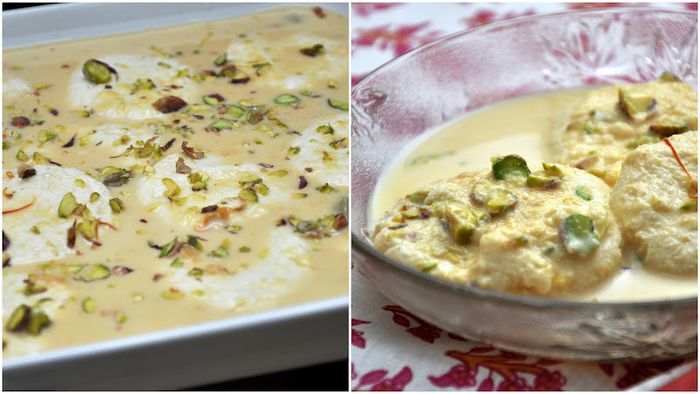
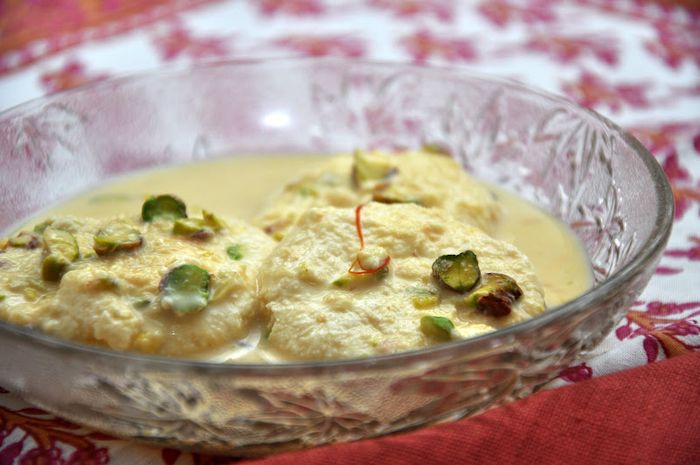
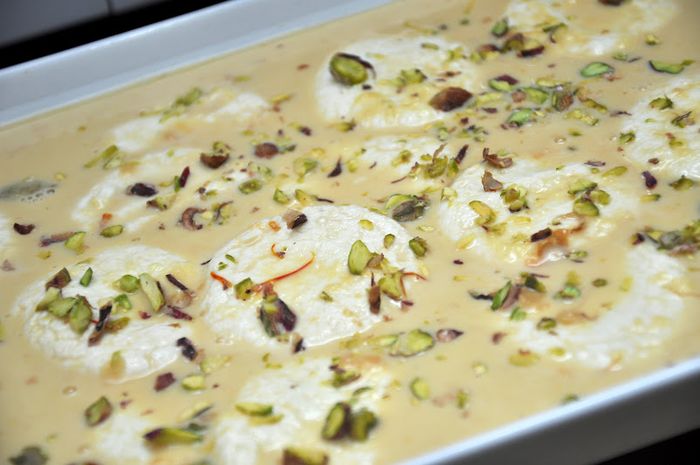
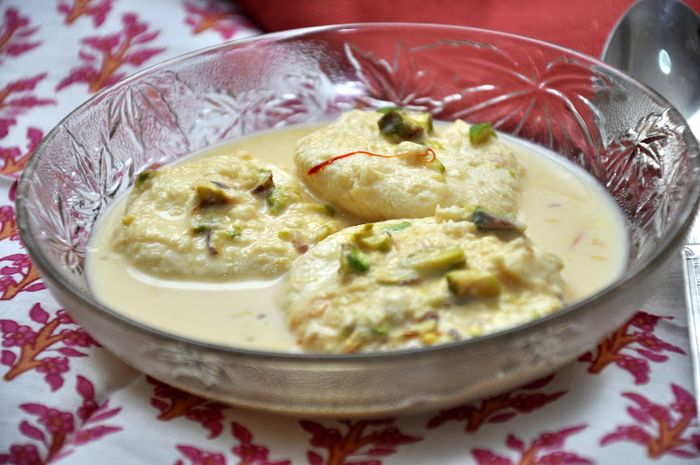
When all the rasgullas are done, place them in a flat, shallow bowl and pour the rabdi over them. Sprinkle with sliced pistachios and let them rest in the refrigerator for 3-4 hours or overnight. The rasgullas will absorb the rabdi and will become even softer. This recipe makes a lot but I promise you, they wont last long!
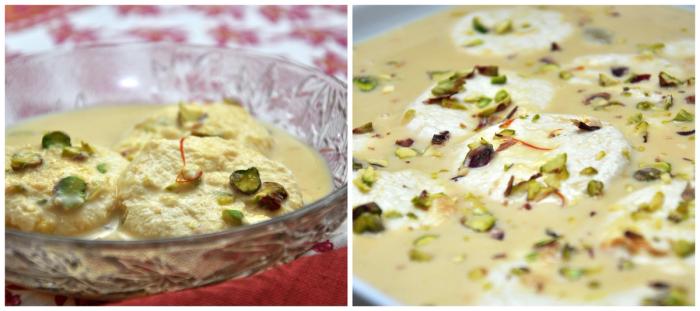
Photo Gallery
Reviews
Sign in to rate this recipe.
No reviews yet — be the first!